
 Contact
 How to shop
Delivery
Shopping guide
Change
 English
 397 b
397 b
Up to 30 days for returns

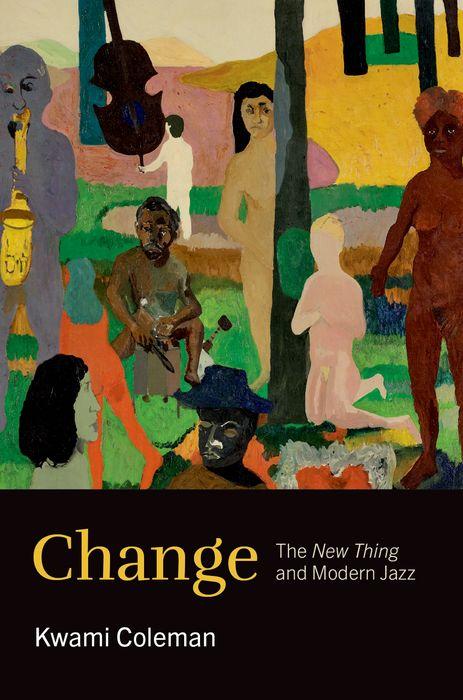
By 1960, musicians, critics, record buyers, and club patrons in New York City agreed that a "new thing" in jazz had arrived. That new thing was what we in the twenty-first century call free jazz, and it represented a significant change within and, for some, a dramatic departure from what was commonly understood as modern jazz. The arresting, abstract sound of the new music pioneered by ensembles led by Ornette Coleman, Cecil Taylor, and other experimentalist improvising musicians became the focal point of an ongoing controversy in the 1960s that called into question their musicianship, legitimacy, and sanity. Flourishing in an age of anti-establishment protest and radical politics--what writer Amiri Baraka characterized as the inevitable expression of Black American culture--and explained by musicians as the product of newfound consciousness, the new thing was, by 1966, almost unanimously dismissed by the music press as the discordant sound of black anger.Author Kwami Coleman integrates musical analyses of key recordings, musician interviews, periodicals, and rare archival sources to tell the story of jazz''s emergent avant-garde, providing readers with ways to listen to and understand this innovative and disruptive music. By shining a comprehensive light on an important and still-misunderstood revolutionary moment in experimental music history, he illustrates the fundamental elements of this new music and what made it so experimental within the context of modern jazz. Coleman proposes heterophony--a multi-voice texture where cohesion is achieved by means other than tonal center and meter--as a theoretical lens by which to interpret the affectual force of the new thing''s abstract harmonic textures and rhythms. In doing so, he draws connections to the social and political world that enveloped and motivated the musicians, writers, and listeners at the heart of the new thing''s practice, recordings, and publicity. In his chronological account of the music''s development in the early 1960s, Coleman offers readers a new framework to better understand the aesthetics and converging cultural currents of experimental free improvisation in the 1960s.


About the book
English
Categories

Give this book today
It's easy
1 Add to cart and choose Deliver as present at the checkout 2 We'll send you a voucher 3 The book will arrive at the recipient's addressHi! I'm Libroamiko, your book advisor.
How can I help you?