
 Contact
 How to shop
Delivery
Shopping guide
Drifting by Intention
Four Epistemic Traditions from within Constructive Design Research
 English
 274 b
274 b
Up to 30 days for returns
Customers also purchased










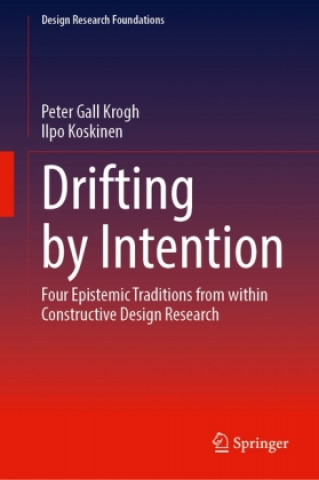
Constructive design research, as laid down in this monograph, is an exploratory endeavor building exemplars, arguments, and evidence. It reframes questions and places them into a better conceptual framework. As new knowledge evolves, the result is often a surprise that leads designers away from initial perceptions of the challenges and objective. The authors' term for this tendency is drifting; designers drift. However, they drift intentionally, knowing what they do. Drifting is a methodic practice of its own. This volume explores how to do it effectively, and how it depends on the concept of knowledge. The authors identify four epistemic traditions in constructive design research. By introducing a Knowledge/Relevance model they clarify how design experiments create knowledge and what kinds of challenges and contributions designers face when drifting. Along the lines of experimental design work the authors identify five main ways in which constructive experiments work. Only one of them borrows its practices from experimental science, others build on other types of precedents, including scientific and artistic. As the book reveals, constructive design research builds on a rich body of research that finds its origins in some of the most important intellectual movements of 20th century. This background further expands constructive design research from a scientific model towards a more tolerant understanding of research. This monograph provides novel helpful models for steering and navigating processes of constructive design research. It helps skill the design researcher in participating in the language games of research and helps the design researcher build research relations beyond the native discipline.


About the book
English
Categories

Give this book today
It's easy
1 Add to cart and choose Deliver as present at the checkout 2 We'll send you a voucher 3 The book will arrive at the recipient's addressYou might also be interested in
 /
/
 Paperback
 16.98
€
16.98
€
 /
Paperback
19.21
€
/
Paperback
19.21
€
 /
Paperback
23.86
€
/
Paperback
23.86
€
Hi! I'm Libroamiko, your book advisor.
How can I help you?