
 Contact
 How to shop
Delivery
Shopping guide
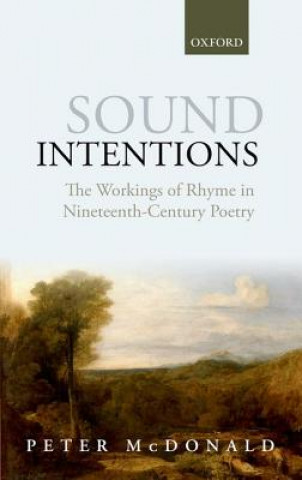
Sound Intentions
 English
 454 b
454 b
Up to 30 days for returns
Customers also purchased



The rhymes in poems are important to understanding how poets write; and in the nineteenth century, rhyme conditioned the ways in which poets heard both themselves and each other writing. Sound Intentions studies the significance of rhyme in the work of Wordsworth, Keats, Tennyson, Christina Rossetti, Hopkins and other poets, including Coleridge, Byron, Elizabeth Barrett Browning, Swinburne, and Hardy. The book's stylistic reading of nineteenth-century poetry argues for Wordsworth's centrality to issues of intention and chance in poets' work, and offers a reading of the formal choices made in poetry as profoundly revealing points of intertextual relation. Sound Intentions includes detailed consideration of the critical meaning of both rhyme and repetition, bringing to bear an emphasis on form as poetry's crucial proving-ground. In a series of detailed readings of important poems, the book shows how close formal attention goes beyond critical formalism, and can become a way of illuminating poets' deepest preoccupations, doubts, and beliefs. Wordsworth's sounding of his own poetic voice, in blank verse as well as rhyme, is here taken as a model for the ways in which later nineteenth-century poets attend to the most perplexing and important voicings of their own poetic originality.


About the book
English

Give this book today
It's easy
1 Add to cart and choose Deliver as present at the checkout 2 We'll send you a voucher 3 The book will arrive at the recipient's addressYou might also be interested in


Hi! I'm Libroamiko, your book advisor.
How can I help you?