
 Contact
 How to shop
Delivery
Shopping guide
Cognitive Science
Integrative Synchronization Mechanisms in Cognitive Neuroarchitectures of Modern Connectionism
 English
 273 b
273 b

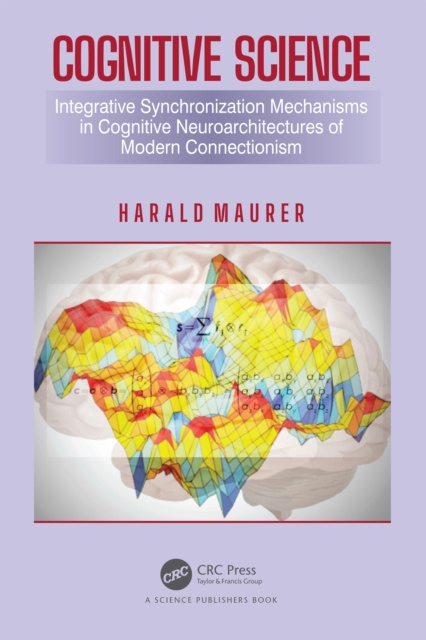
The Mind and Brain are usually considered as one and the same nonlinear, complex dynamical system, in which information processing can be described with vector and tensor transformations and with attractors in multidimensional state spaces. Thus, an internal neurocognitive representation concept consists of a dynamical process which filters out statistical prototypes from the sensorial information in terms of coherent and adaptive n-dimensional vector fields. These prototypes serve as a basis for dynamic, probabilistic predictions or probabilistic hypotheses on prospective new data (see the recently introduced approach of "e;predictive coding"e; in neurophilosophy). Furthermore, the phenomenon of sensory and language cognition would thus be based on a multitude of self-regulatory complex dynamics of synchronous self-organization mechanisms, in other words, an emergent "e;flux equilibrium process"e; ("e;steady state"e;) of the total collective and coherent neural activity resulting from the oscillatory actions of neuronal assemblies. In perception it is shown how sensory object informations, like the object color or the object form, can be dynamically related together or can be integrated to a neurally based representation of this perceptual object by means of a synchronization mechanism ("e;feature binding"e;). In language processing it is shown how semantic concepts and syntactic roles can be dynamically related together or can be integrated to neurally based systematic and compositional connectionist representations by means of a synchronization mechanism ("e;variable binding"e;) solving the Fodor-Pylyshyn-Challenge. Since the systemtheoretical connectionism has succeeded in modeling the sensory objects in perception as well as systematic and compositional representations in language processing with this vector- and oscillation-based representation format, a new, convincing theory of neurocognition has been developed, which bridges the neuronal and the cognitive analysis level.The book describes how elementary neuronal information is combined in perception and language, so it becomes clear how the brain processes this information to enable basic cognitive performance of the humans.


About the book
English

Give this book today
It's easy
1 Add to cart and choose Deliver as present at the checkout 2 We'll send you a voucher 3 The book will arrive at the recipient's addressHi! I'm Libroamiko, your book advisor.
How can I help you?