
 Contact
 How to shop
Delivery
Shopping guide
 English
 195 b
195 b
Customers also purchased

 /
/
 Hardback
 30.56
€
30.56
€

 /
Paperback
48.66
€
/
Paperback
48.66
€

 /
Paperback
24.93
€
/
Paperback
24.93
€







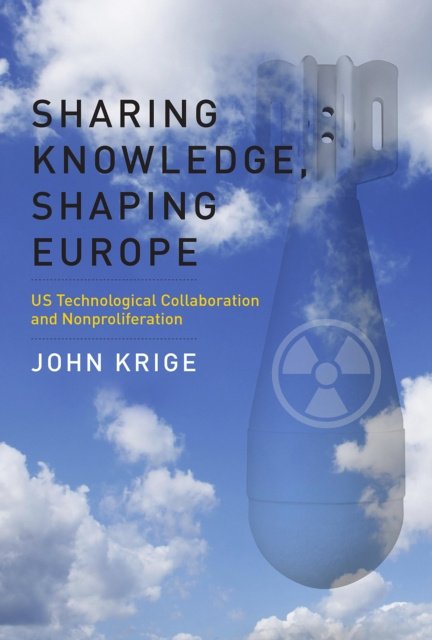
How America used its technological leadership in the 1950s and the 1960s to foster European collaboration and curb nuclear proliferation, with varying degrees of success.In the 1950s and the 1960s, U.S. administrations were determined to prevent Western European countries from developing independent national nuclear weapons programs. To do so, the United States attempted to use its technological pre-eminence as a tool of "e;soft power"e; to steer Western European technological choices toward the peaceful uses of the atom and of space, encouraging options that fostered collaboration, promoted nonproliferation, and defused challenges to U.S. technological superiority. In Sharing Knowledge, Shaping Europe, John Krige describes these efforts and the varying degrees of success they achieved. Krige explains that the pursuit of scientific and technological leadership, galvanized by America's Cold War competition with the Soviet Union, was also used for techno-political collaboration with major allies. He examines a series of multinational arrangements involving shared technological platforms and aimed at curbing nuclear proliferation, and he describes the roles of the Department of State, the Atomic Energy Commission, and NASA. To their dismay, these agencies discovered that the use of technology as an instrument of soft power was seriously circumscribed, by internal divisions within successive administrations and by external opposition from European countries. It was successful, Krige argues, only when technological leadership was embedded in a web of supportive "e;harder"e; power structures.


About the book
English
Categories

Give this book today
It's easy
1 Add to cart and choose Deliver as present at the checkout 2 We'll send you a voucher 3 The book will arrive at the recipient's addressYou might also be interested in









 /
Hardback
116.03
€
/
Hardback
116.03
€

Hi! I'm Libroamiko, your book advisor.
How can I help you?